Sharing Community Histories


A Network for Faculty from Boston Area Institutions

Call for applications: The Northeastern Humanities Center, in collaboration with the Reckonings Project, NULab for Digital Humanities and Computational Social Science, AHA Lab, and the Center for Digital Scholarship at Northeastern, invites applications for an 11-month program for Engaged Scholars from Boston-area higher education institutions working in the arts and humanities and related fields, running from February to December 2026.

Applications are due Monday, November 24th at 10pm. Learn more and apply here.

Filling the gaps: Why my students work with Wikipedia


Dean Allbritton is an Associate Professor of Spanish at Colby College, where he teaches courses on Spanish visual culture, illness, and gender and sexuality. He also serves as Director of the Center for the Arts and Humanities at Colby College and Executive Director of the New England Humanities Consortium.

When I introduce the idea of working with Wikipedia to my classes, I inevitably get a few puzzled looks. The most common reaction is something like, “Wait, we’re allowed to use Wikipedia? I thought it was unreliable because anyone can edit it.”

It’s a common – pervasive, even – misconception. Once students complete Wiki Education’s early training modules, they’re often surprised by the rigorous protocols for sourcing information and the emphasis on writing without bias. They come to appreciate how Wikipedia’s ease of use is balanced by its clear guidelines and strong communities of editors who uphold them. The result is a resource that’s robust enough for scholarly work and for settling a dinner-table debate.

What they love most about the Wikipedia assignment is the chance to fill in the gaps. Like any human-powered tool, Wikipedia reflects the same blind spots and historical invisibilities that exist in many institutions. Some people and topics fall through the cracks – not because they aren’t important or notable, but because institutional factors have excluded them from official records, downplayed their impact, or failed to recognize their significance. I want my students to be able to recognize those gaps and, when possible, address them – both on and off the screen.

It can be frustrating to find those omissions. But Wikipedia gives all of us a chance to correct them through careful open-source citation and verification.

One of my classes was stunned to discover that renowned visual artist José “Pepe” Espaliú had no Wikipedia article in English. Espaliú was an early and influential Spanish visual and performance artist working from the perspective of someone living with HIV/AIDS in the early 1990s. His absence prompted us to consider the historical ruptures and discrimination that might explain this lack of representation.

Sometimes a gap is just a gap, waiting for someone to fill it. Other times, it reflects a systemic issue of visibility. In this case, a determined group of my students decided to change that.

Wikipedia offers a form of real-world action in a time when many of us feel stuck or powerless. It turns discovery into action in a way that is more than representation (though it is that, too). It’s a chance to be heard, to create something meaningful, and to work collectively to add to a shared body of knowledge. It’s rewarding, it matters, and it’s work you can be proud of.

Reposted from WikiEdu, which originally ran the blog post on August 15, 2025. Full link here.

Advocating for the Humanities Across the Country

Reposted from the National Humanities Alliance

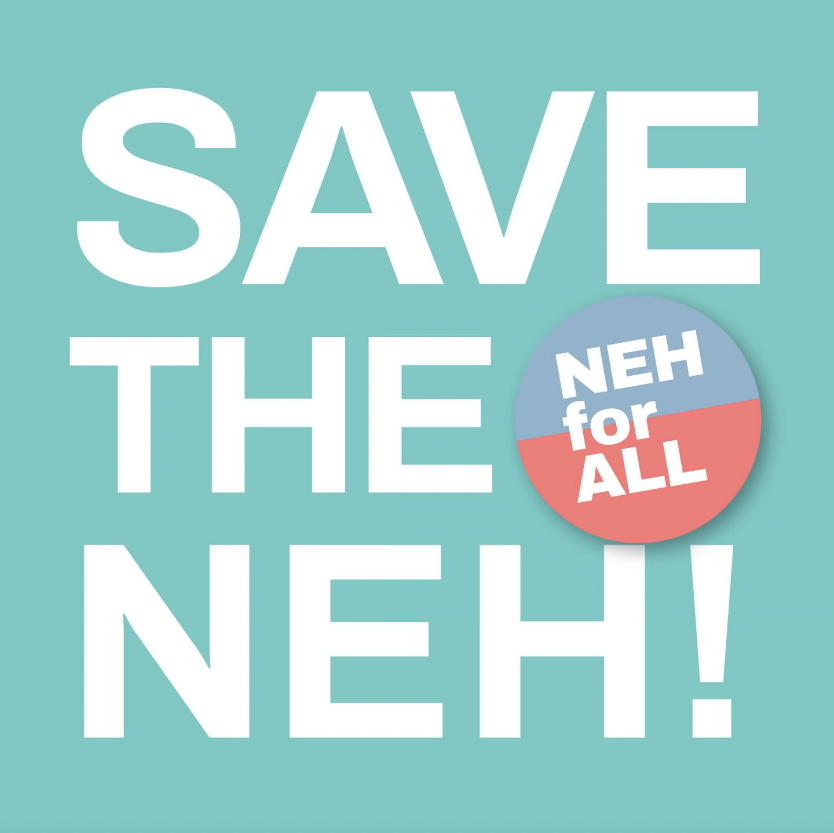
On Monday, March 31, 2025 we learned that the Department of Government Efficiency (DOGE) is targeting the National Endowment for the Humanities (NEH) with the aim of substantially reducing its staff, cutting the agency’s grant programs, and rescinding grants that have already been awarded.
As we have seen with similar recent actions, including the recent attack on IMLS, these actions have the potential to devastate the agency.
We learned the morning of Thursday, April 3, that DOGE has begun terminating previously awarded NEH grants. We understand that this includes operating grants to the state and jurisdictional humanities councils, scholarly societies, community organizations, and individuals.
It is imperative that you take action now by reaching out to your Members of Congress and encouraging them to support the NEH.
Visit the link to learn more and take action. https://nhalliance.org/federal-funding/savetheneh/

Faculty of Color Working Group: Convivencia

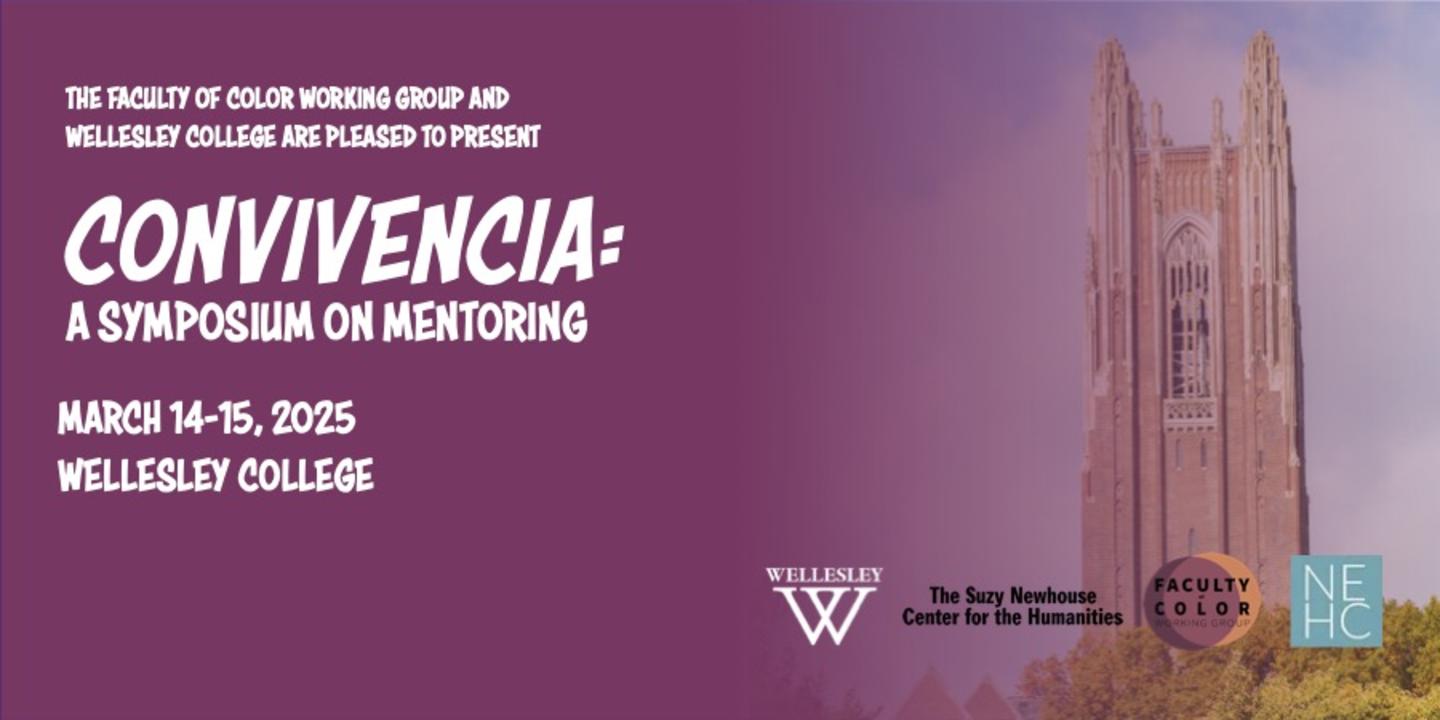
Call for Applications – Convivencia: A Symposium on Mentoring

The Faculty of Color Working Group (FOCWG) invites applications for participation in “Convivencia: A Symposium on Mentoring,” to take place March 14-15, 2025 at Wellesley College. The gathering will bring together a small group of faculty of color, at all ranks, who are invested in learning about mentoring as a supportive practice and competency of leadership excellence.

The convivencia, a bringing together of relations, will engage all participants in an exploration of how self, community, and future can be envisioned in collaboration. The work of the convivencia will feature workshops by scholar-leaders with unique perspectives on shaping the support environment for BIPOC faculty. The convivencia will rely on the strength and expertise of all attendees and feature four scholar-leaders: Dr. Lorgia Garcia Peña, author of Community as RebellionDr. Beronda Montgomery, author of Lessons from PlantsDr. Menah Pratt, author of Blackwildgirl; and Dr. Nelia Viveiros, editor of Incivility and Higher Education: The Costs of Bad Behaviour. These scholar-leaders will enter into conversation with the attending network of mentors and mentees.

We invite interested faculty to apply for participation in the gathering. The FOCWG is committed to ensuring that a strong commitment to developing mentoring and leadership skills is a common goal for all in attendance. Accepted participants will be awarded an honorarium of $450 to help defray travel costs. Participants must commit to engaged attendance on both days of the convivencia.

The goal of the convivencia is to reinvigorate the network, bring new leading voices into conversation, and workshop the mechanisms for network growth and development. As the work of the FOCWG evolves beyond its original Mellon Foundation grant, the convivencia will help seed the foundation for future growth at its next institutional home.

The original FOCWG Mellon Mentors Program–which operated from 2020-2023–worked to partner early-career BIPOC faculty with trained senior mentors to create enduring professional relationships that would provide guidance, resources, and support to early career scholars as they cement their foothold in academia. The FOCWG Mellon Mentors Program created mentoring cohorts that offered multiple models of mentoring and expanded the network of support for program participants. Program participants worked with FOCWG Mellon Mentors—successful faculty committed to the support and advancement of BIPOC colleagues and who participated in the FOCWG Mentor Training Program.

To apply, please fill out the application by October 1, 2024.

Call for Papers! The End(s) of Democracy

Call for Papers: The End(s) of Democracy | Political Concepts 2025

The annual Political Concepts conference will take place on Friday and Saturday, February 28 and March 1, 2025, at Brown University, under the auspices of the Cogut Institute for the Humanities. The conference is part of the Political Concepts Initiative, a collaborative project of colleagues from the New School, Columbia University, NYU, CUNY, and Brown, and is convened by Timothy Bewes, Ainsley LeSure, Brian Meeks, Adi Ophir, and Vazira Zamindar.

The goal of the Political Concepts Initiative is to experiment with modes of concept construction, concept performance, and/or concept analysis, and to use this concept-work as a tool for enhancing critical questioning of the political, while creating a framework for an ongoing conversation across disciplines, methodologies, and styles of thinking in the humanities and social sciences.

The deadline to submit a title and 400- to 600-word abstract relevant for critical reflections on “the end(s) of democracy” is August 15, 2024.

Participants are invited to present a single concept that helps thinking about, revising, or questioning some of the concerns outlined in the call for papers. Such a concept may be one that needs to be revised, deconstructed, or invented to better reflect on, criticize, or resist whatever falls under this ambiguous title. Only concepts (usually one or two words) are admitted as titles.

If your proposal is selected and you will be coming from outside Brown, the Cogut Institute will reimburse your travel expenses and cover your lodging in Providence. If you have any questions about the conference or the project, please email humanities-institute@brown.edu. Submit an abstract here.

Call for Papers! 18th Annual Black New England Conference

CALL FOR PAPERS:18th Annual Black New England Conference

Living Out Loud: The Intersectionality of Race, Gender, and Sexual Orientation | Deadline June 1, 2024

The intersectionality of race, gender, and sexual orientation has been historically intertwined, reflecting the complex dynamics of power, privilege, and oppression within society. Throughout history, marginalized communities have faced multiple forms of discrimination and marginalization, exacerbating their struggles for recognition, equality, and justice.

From the civil rights movement to voting rights to the LGBTQ+ rights movement, individuals at the intersections of race, gender, and sexual orientation have played pivotal roles in challenging oppressive systems and advocating for social change. Individuals who navigate multiple marginalized identities continue to influence contemporary experiences through the arts, culture, and activism.The 18th Annual Black New England Conference will highlight the history of Black LGBTQ trailblazers and their contributions to American history, explore evolving cultural norms, gender roles and presentation, depiction in popular culture, and finally emerging movements.  The conference will offer a forward-looking perspective, envisioning potential future trends and possibilities for greater inclusivity, equity, and social change. We will celebrate success stories of both individuals and institutions that serve as beacons of hope for current generations to authentically live out their identities.

The three facilitated panel discussions will explore themes of:

  1. Black Queer History is America’s History: History of Black LGBTQ trailblazers and their contributions to American history, and How Black Queer culture shaped history
  2. Culture: gender roles and presentation; the depictions and influence of queer culture on dress language and art, activism; health disparities and mental health; and Protecting Our Most Vulnerable: Centering Black Queerness in the Fight for Equality
  3. Moving Forward: Trends for the Future including gender nonconformity, social media, media and beyond

Submission Guidelines for your Call for Papers

We invite abstracts for a 10-minute presentation.  Abstracts should be no more than 200 words and should be submitted along with a brief biography to info@blackheritagetrailnh.org no later than June 1, 2024.  Notification of acceptance will be sent no later than July 26, 2024.

The Black New England Conference is an annual 2-day gathering where academics, artists, activists, and community members share insights and research on Black experiences, past and present, in New England and beyond. The Conference is both an academic conference and a celebration of Black life and history.  BNEC is a hybrid in-person/virtual one day conference to be held on October 5, 2024 at Southern New Hampshire University in Manchester NH.  Content will include 3 facilitated panels, a mid-day Keynote, and evening awards event.

Black Heritage Trail of New Hampshire (BHTNH) envisions a New Hampshire where communities understand and celebrate a people’s history of resilience, versatility, and courage, and come together to overcome racial division. BHTNH promotes awareness and appreciation of African American history and life to build more inclusive communities today. Our programs include historical education, celebrations of culture, and facilitated intellectual discussions and community dialogue. As such, the Annual Black New England Conference is a cornerstone program designed to engage audiences at various stages of learning, reinforce and deepen learning, and increase the number of people having conversations about race.  We believe the depth of those conversations ultimately increases understanding and empowers participants to develop attitudes of tolerance and acceptance of the dignity of every person through a learning experience of a more inclusive history of New Hampshire and beyond.

Being Black in the Ivory

When Shardé M. Davis turned to social media during the summer of racial reckoning in 2020, she meant only to share how racism against Black people affects her personally.

But her hashtag, BlackintheIvory, went viral, fostering a flood of Black scholars sharing similar stories. Soon the posts were being quoted during summer institutes and workshops on social justice, equity, diversity, and inclusion. And in fall 2020, faculty assigned the tweets as material for course curriculum.This curated collection of original personal narratives from Black scholars across the country seeks to continue the conversation that started with BlackintheIvory. Put together, the stories reveal how racism eats its way through higher education, how academia systemically ejects Black scholars in overt and covert ways, and how academic institutions—and their individual members—might make lasting change. While anti-Black racism in academia is a behemoth with many entry points to the conversation, this book marshals a diverse group of Black voices to bring to light what for too long has been hidden in the shadow of the ivory tower. Author Shardé M. Davis received the (inaugural) 2021 Faculty of Color Working Group Fellowship at UConn’s Humanities Institute to work on a book for the viral Twitter hashtag that she created called #BlackintheIvory.

A King in our Midst

Each year, The New England Humanities Consortium (NEHC), a network of universities and colleges dedicated to intellectual collaboration and regional programming, puts out a call to member institutions for projects that bring faculty and students together across campuses to do meaningful work. This year, when she saw the call, UNH Professor of Anthropology and Director of the Center for the Humanities Meghan Howey texted her friend and former colleague, Kabria Baumgartner, now at Northeastern University, and said, “Let’s go find Pompey.”

The Center for Humanities at Tufts Fellowship Opportunities

Tufts Center for the Humanities

2024 – 2025 Fellowship Opportunities

Andrew W. Mellon Postdoctoral Fellowship Program

Wesleyan University Center for the Humanities

2024-2025 / 2025-2026

Scroll to top